
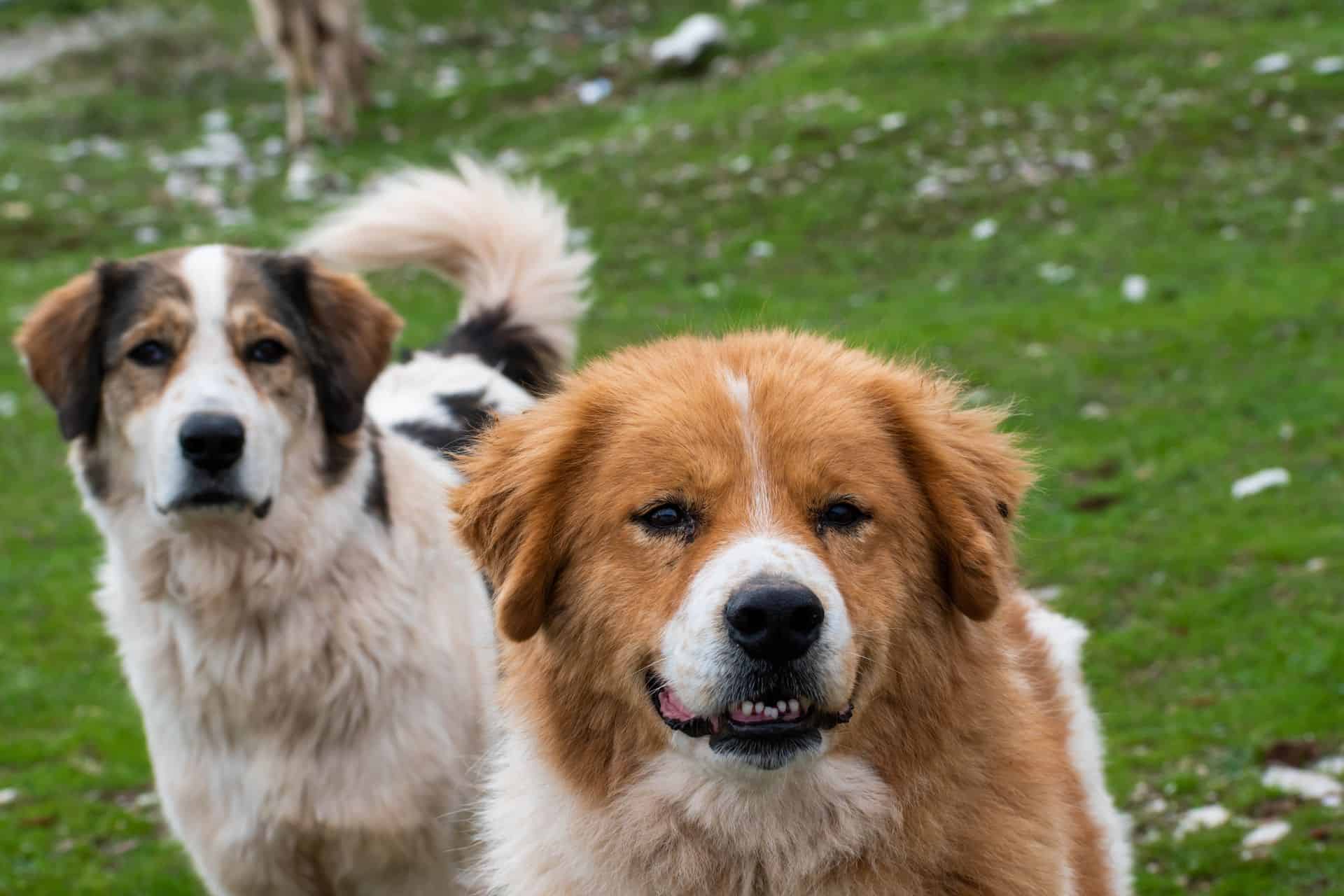
Livestock guardian dogs can be an effective part of a wider livestock-protection system. They live with the herd, detect threats and discourage predators through their presence, barking and territorial behaviour.
Their success depends on choosing appropriate dogs, starting socialisation with the herd early, ensuring good welfare throughout their working life. Guardian dogs should not be treated as a stand-alone solution: they work best alongside supervision, secure night enclosures, fencing and good carcass and waste management.
When Guardian Dogs Are an Appropriate Solution
Guardian dogs may be suitable where livestock graze in open areas regularly used by wolves or bears, especially in extensive or semi-extensive farming systems.
They are most useful when:
- you have multiple dogs, scalable to the size of the herd/flock;
- dogs of varying ages so the younger acquired puppies/dogs learn from the older ones;
- animals spend long periods on open or remote pastures;
- active shepherding is available;
- livestock remain in cohesive groups;
- farmers can provide daily care and supervision;
- conflicts with walkers, neighbours and other dogs can be managed.
They may be less suitable where:
- livestock are scattered over a very large area;
- the farmer cannot inspect the dogs regularly;
- grazing takes place close to busy recreation routes;
- dogs cannot be legally kept or used off-lead;
- there is no secure place for training young dogs;
- the farm cannot support the long-term costs.
Before introducing guardian dogs, assess the local predation pattern, herd structure, terrain, public access and existing protection measures.
Selecting Suitable Dogs
The most important qualities are not appearance or size, but temperament, health and working suitability.
A good livestock guardian dog should be:
- calm and attentive around livestock;
- confident without being uncontrollably aggressive;
- capable of independent decision-making;
- physically suited to the local climate and terrain;
- healthy and free from serious inherited conditions;
- obtained from reliable working lines where possible.
Puppies should ideally come from parents that have successfully guarded livestock. Adult dogs with proven experience may be appropriate in some situations, but introducing them to a new herd still requires careful supervision.
The number of dogs needed depends on:
- herd size;
- predator pressure;
- landscape openness;
- vegetation and visibility;
- the presence of several livestock groups;
- whether bears, wolves or both are present.
One dog is not efficient for any herd size. Multiple dogs are required for large herds or high-risk areas. A group of compatible dogs can provide broader coverage and mutual support.
Early Socialisation and Training
Guardian dogs must form a strong social bond with livestock while remaining manageable by people.
Socialisation should begin while the dog is young. The puppy should spend most of its time close to calm livestock in a safe enclosure, with regular supervision. Having older good working dogs present will help with the training procedure.
Early training should focus on the dog:
- staying close to the herd;
- remaining calm around young animals;
- responding to basic commands;
- accepting handling and veterinary checks;
- respecting fences and farm boundaries;
- tolerating routine human presence.
Training should be consistent and calm. Harsh punishment can increase fear or aggression and may weaken trust and commitment to the protection of the herd/flock.
Young dogs should not be expected to work independently too soon. Their behaviour must be monitored closely until they are physically and socially mature.
Young dogs should not be expected to be fully independent and trustworthy guardian dogs until at least 1 year of age.
Integrating Dogs With the Herd
Introduction should be gradual.
A practical process may include:
- placing the young dog with a small group of calm livestock;
- supervising all early interactions;
- correcting chasing, biting or rough play with the livestock immediately;
- gradually increasing the size of the livestock group the dog is exposed to;
- introducing the dog to grazing areas in controlled stages;
- pairing the young dog with an experienced guardian dog where possible.
dog where possible.
The dog should identify the herd as its primary social group. Excessive time away from livestock or frequent use as a household pet may reduce this bond. The dog should not simultaneously be a household pet.
During the first grazing seasons, watch for:
- chasing;
- playful biting;
- separation from the herd;
- following people instead of livestock;
- conflict with other farm dogs;
- guarding feed rather than animals.
Dogs should work as part of a wider system. Night enclosures, fencing, shepherding and safe carcass management remain important even when guardian dogs are present.
Managing Interactions With Walkers and Local Residents
Guardian dogs may bark, approach or block people they perceive as moving towards the herd. This behaviour can be effective against predators but may worry walkers, cyclists and residents.
Farmers should reduce conflict by:
- placing clear signs at access points;
- informing local communities and tourism operators;
- avoiding feeding dogs beside public paths;
- keeping livestock away from the busiest routes where possible;
- training dogs to tolerate normal human activity;
- removing dogs that show repeated uncontrolled aggression;
- providing contact information for reporting problems.
Signs should explain:
- that the dogs are working;
- that barking is normal;
- that visitors should move calmly;
- that dogs should not be fed, touched or challenged;
- that visitors should keep their own dogs close;
- how to pass the herd safely.
Walkers should avoid running, shouting, throwing objects or moving directly through the livestock. People with pet dogs should keep them on a short lead and create distance from the herd.
Schools, guides and local organisations can help explain the role of guardian dogs and encourage safe behaviour.
Health, Feeding and Welfare
A guardian dog is a working animal and requires lifelong care.
Essential welfare provisions include:
- sufficient high-quality food;
- constant access to clean water;
- shelter from heat, cold and severe weather conditions;
- regular vaccinations and parasite control;
- identification and registration;
- regular veterinary checks;
- treatment of injuries and illness;
- appropriate rest and recovery;
- responsible breeding or neutering decisions.
Food should be provided in a way that does not attract bears, wolves or scavengers. Leftovers and packaging should be removed, and feeding areas should be kept clean.
Dogs working in remote areas should be checked daily. Paw injuries, bites, weight loss, heat stress and lameness may otherwise go unnoticed and can affect the effectiveness of the dogs’ collective protective abilities.
GPS devices may support supervision, but they do not replace physical checks.
Common Problems and Corrective Measures
Chasing or injuring livestock
Return the dog to a smaller supervised group. Interrupt the behaviour consistently and provide more structured contact with calm animals. Persistent dangerous behaviour requires professional assessment. If the problem does not cease, change it to the role of a pet or surrender the dog to local authorities. Do not abandon it.
Leaving the herd
Check whether the dog is bonded to livestock, receiving adequate food and working with compatible dogs. Reduce opportunities to follow people, vehicles or other dogs.
Excessive aggression towards people
Review socialisation, public access and herd location. Increase controlled exposure to normal farm visitors. Dogs that present an ongoing safety risk should be removed from public-facing areas and assessed by an experienced trainer or veterinarian.
Fighting between guardian dogs
Consider sex, age, feeding arrangements and group structure. Feed dogs separately when necessary and introduce new dogs gradually.
Barking at night
Barking is part of guarding behaviour, but repeated barking may indicate nearby wildlife, disturbance or boredom. Check the area before assuming it is unnecessary.
Production of puppies
Packs with intact females will result in puppies. Sometimes, it is helpful to have the cycle of the pack continue and for the young puppies to start young and learn from the older dogs. However, oftentimes puppies are not desirable. Rather than straining the females with repeated pregnancies, it is more appropriate to neuter the females to ensure unwanted litters are not created.
Male dog behaviour changes when female dogs are on heat and their attention shifts from protecting the livestock to wanting to reproduce only. This reduces the protection of livestock during these periods.
Ineffective protection
Possible causes include:
- inappropriate dog breeds chosen;
- too few dogs;
- young or inexperienced dogs in the pack only;
- livestock spread over too wide an area;
- poor health;
- weak herd bonding;
- lack of supervision;
- high predator pressure;
- carcasses or attractants nearby.
The solution may require more than adding another dog. Review the full protection system.
Costs and Long-Term Commitment
Guardian dogs require investment throughout their lives.
Costs may include:
- purchase or breeding;
- food;
- veterinary care;
- vaccination and parasite treatment;
- identification and registration;
- shelter and transport;
- training;
- GPS equipment;
- insurance or liability costs;
- replacement after retirement or loss.
Their economic value should be considered over several years, not only during the first season. Well-managed dogs can reduce losses, support shepherding and provide continuous protection, but poor training or inadequate care can create new problems.
Before introducing guardian dogs, farmers should confirm that they can provide:
- daily care;
- long-term funding;
- training time;
- backup during illness or absence;
- responsible retirement;
- communication with neighbours and visitors.
Pilot actions under D3.2.3 should be used to add real project evidence on dog numbers, farm conditions, costs, damage reduction and farmer feedback. The project documentation already identifies dog-related pilots as relevant to bear and wolf coexistence.