
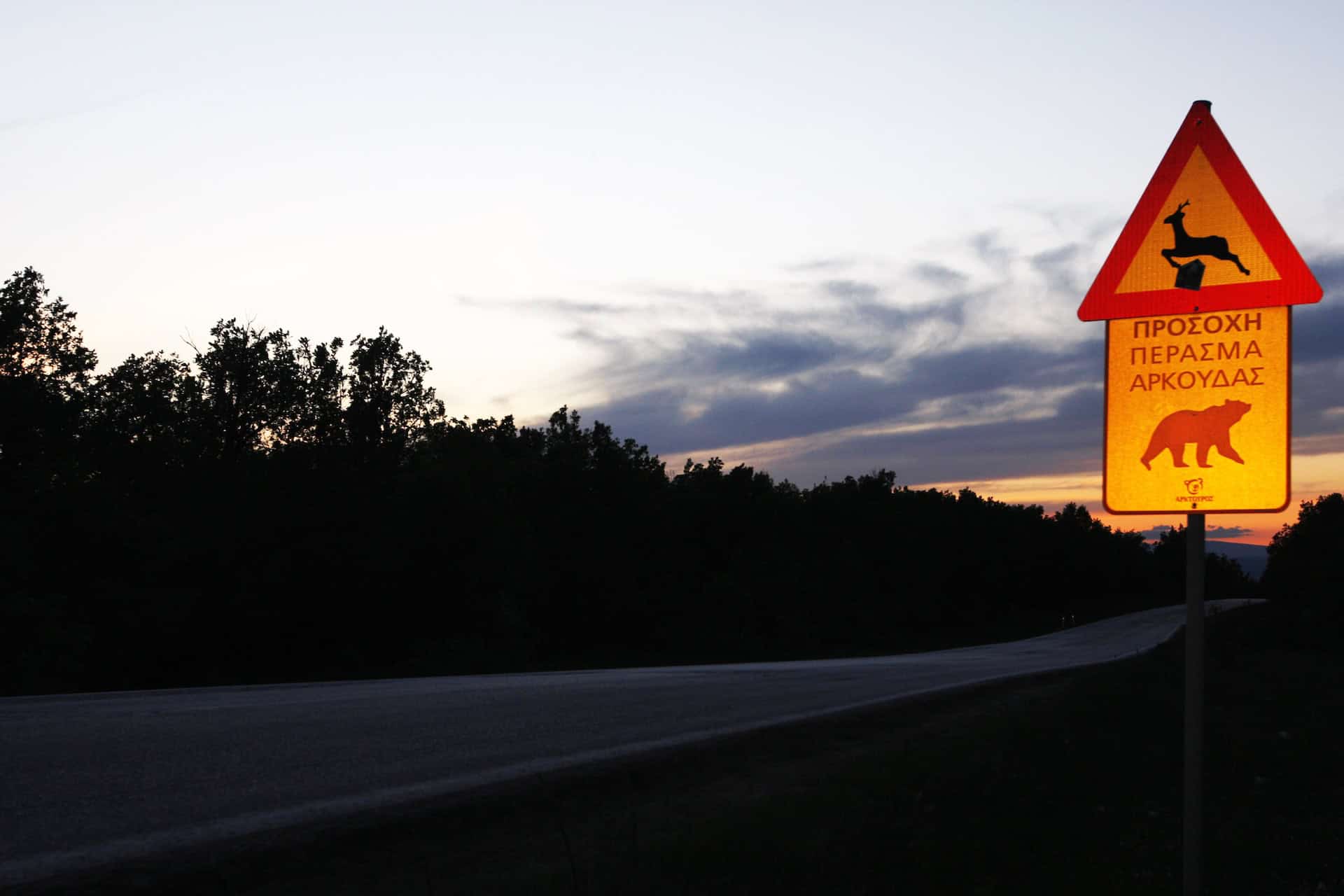
Road networks crossing through forested and rural landscapes create unavoidable intersections between human transportation infrastructure and large carnivore habitats. As European carnivore populations recover and expand into former ranges, vehicle-wildlife collisions have become increasingly frequent, posing serious risks to human safety, animal welfare, and conservation efforts.
These guidelines explain what to do when you encounter a large carnivore on or near a road, how to respond if a collision occurs, and how to properly report sightings and incidents to authorities. It covers immediate safety procedures at accident scenes, obligations toward injured animals, documentation requirements for insurance and conservation purposes, and strategies for preventing future collisions.
Understanding Road Risk Patterns for Large Carnivores
Each large carnivore species interacts with roads differently based on movement ecology and behavioural adaptations.
Brown bears cross roads most frequently during dawn and dusk when travelling between feeding sites. Their large body mass makes collisions particularly dangerous for vehicle occupants.
Wolves cross roads more frequently than population density would suggest because pack territories require regular movement between hunting grounds. Wolf-vehicle collisions peak during winter months when snow depth funnels animal movements along plowed road corridors.
Lynx are solitary animals whose crossings happen predominantly at night, while golden jackals increasingly inhabit human-modified landscapes and demonstrate greater tolerance for paved surfaces.
All four species benefit from wildlife underpasses that allow road crossing without entering traffic lanes.
You can find more information here, here and here.
Safe Driving Practices in Carnivore Habitats
Which practices to follow?
- Reduce vehicle speed significantly when driving through areas with wildlife warning signs or known carnivore habitats. Lower speeds increase reaction time and shorten braking distances.
- Observe posted speed limits strictly during dawn, dusk, and nighttime hours when large carnivore activity peaks.
- Continuously scan road shoulders and tree lines while driving through wildlife areas.
- Watch for eye reflections in headlights that often reveal animal presence before body shapes become visible.
- Look for movement patterns near road edges including shifting shadows, rustling vegetation, or birds taking flight that may indicate larger animals nearby.
- Use high beam headlights whenever oncoming traffic permits, as extended illumination reveals animals at greater distances.
- When spotting a large carnivore, reduce speed immediately without slamming brakes.
- Stay in your lane rather than swerving suddenly, as off-road excursions typically cause more severe injuries than animal impacts.
You can find more information here and here.
Immediate Response After a Vehicle-Wildlife Collision
What should you do if a collision has taken place?
- Activate hazard lights immediately and bring the vehicle to a controlled stop on the road shoulder.
- Do not exit the vehicle hastily—a wounded large carnivore may remain nearby and could react aggressively if surprised. Survey surroundings through windows before opening doors, checking mirrors and looking into darkened areas where an injured animal may have retreated.
- Do not touch or move carcasses—in most European jurisdictions, large carnivore remains constitute protected species requiring official handling.
- If it is safe, deploy reflective warning triangles behind the stopped vehicle to alert approaching drivers. Call emergency services using 112 or regional equivalent. Report the location precisely. Describe the situation including vehicle status, occupant injuries, and whether the animal remains on the roadway. Request both police for accident documentation and wildlife authorities for animal assessment.
You can find more information here and here.
Handling Injured or Deceased Animals at the Scene
What should you do if injured or deceased animals are at the scene?
- Never approach an injured large carnivore regardless of apparent severity. Bears, wolves, lynx, and jackals retain significant capacity for sudden violent movement even when severely injured.
- Maintain minimum distances of fifty metres from bears and at least thirty metres from other species.
- Observe from inside vehicles whenever possible.
- Do not attempt first aid or comfort—human contact increases animal stress and places rescuers at severe risk.
- Observe the animal from safe distance for breathing movements, blinking, or limb twitching indicating consciousness.
- Record these observations for authorities who will determine appropriate response protocols.
- If the animal moves off the road into vegetation, note the direction of travel but do not follow.
- Confirm death only through extended observation of complete immobility from safe distance.
- Do not touch or move carcasses—in most European jurisdictions, large carnivore remains constitute protected species requiring official handling.
You can get more information here and here.
Reporting Sightings: Procedures and Best Practices
What to do?
- Report any confirmed sighting of a large carnivore in your area, particularly if the observation occurs near residential zones, school routes, or recreational areas.
- Multiple sightings of the same individual within a short timeframe warrant immediate reporting as they may indicate habituation developing.
- Report animals displaying unusual behaviour including approaching buildings or failing to flee human presence.
- Compile comprehensive observation records including exact date and time, precise location, species identification, estimated number of animals, and detailed behavioural description.
- Note environmental conditions including weather and light levels.
- Record direction of travel and whether the animal appeared aware of human presence.
- Submit sightings through regional wildlife authority hotlines, online reporting platforms maintained by national conservation agencies, or citizen science applications designed for mammal tracking.
- Many countries operate dedicated large carnivore monitoring programmes accepting public submissions. Provide contact information enabling follow-up questions if researchers need clarification.
You can get more information here and here.
Preventing Future Collisions Through Collective Action
How can you help?
- Advocate for wildlife passages including overpass bridges, underpass tunnels and modified culverts designed specifically for large carnivore movement. These structures have demonstrated significant collision reduction in regions where installed.
- Encourage transportation authorities to install reflectors along road edges that deflect headlight beams into adjacent habitat, warning animals before they enter roadway surfaces.
- Organise local educational initiatives raising driver awareness about carnivore road risks through community newsletters, school programmes, and social media outreach.
- Share verified sighting reports with neighbours.
- Collaborate with driving schools to incorporate wildlife-aware driving modules into learner curricula.
- Maintain personal records of wildlife sightings. Share these observations consistently with reporting systems.
- Support local research initiatives through volunteer participation in camera trap monitoring or roadkill surveys.
Consistent individual actions create culture shifts that normalise carnivore-conscious driving as standard practice, ultimately reducing collision rates.