
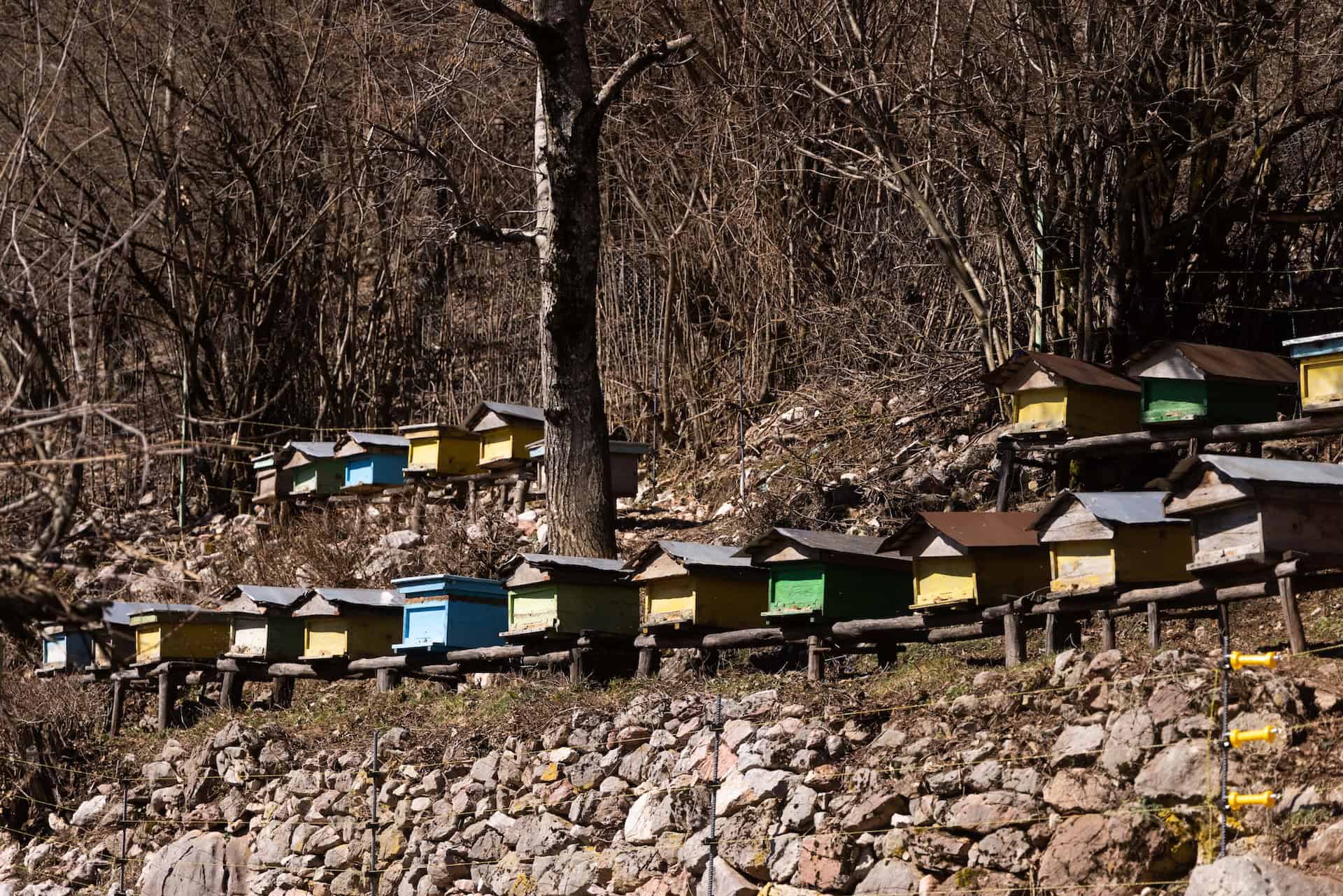
Beehives and apiaries can be attractive food resources for bears. Honey, brood, bees and other hive products provide a concentrated source of energy, and once a bear has successfully accessed an apiary, it will likely return repeatedly. Damage can include destroyed hives, loss of entire bee colonies and honey, and increased risk of further bear activity around the site.
The most effective approach is prevention before the first attack. A well-designed and maintained electric fence with regular inspections can substantially reduce the risk of damages. For electric fences to work, it’s importance regular maintenance is performed to ensure no plant material interferes with the fence, which prevents it from working. Prevention should be adapted to local bear activity, terrain, apiary type and the possibility of moving the hives.
No single measure is guaranteed to prevent every incident. Protection works best when several measures are combined and checked regularly. An additional source of prevention is to place motion-detecting deterrent devices on the posts of the electric fence facing the most likely route of entry.
Why bears are attracted to beehives
Bears are opportunistic omnivores and may investigate food sources that are concentrated, predictable and relatively easy to access. An apiary can provide several attractive resources at the same time: honey, bees, brood/larvae and wax. Bears target apiaries when they are targeting high-energy food, particularly when gaining weight prior to the winter months.
Even if bears have access to enough natural food resources, unprotected apiaries are an easy and fast food source to bears. Thus, to prevent damages rom wildlife , beekeepers must protect their beehives appropriately.
Assessing risk before establishing an apiary
It is important to evaluate the likelihood of an apiary being a success given the location/s and the resources available to the beekeeper.
Before selecting a location, consider:
- recent bear observations from the area;
- previous damage to nearby apiaries;
- distance from forest cover and likely bear movement routes;
- terrain and visibility around the proposed site;
- ease of electric fence set up;
- availability and affordability of electricity or suitable solar power;
- accessibility for the beekeeper for general maintenance;
- water availability and seasonal flooding risk;
- proximity to roads, houses, livestock and recreational areas;
- whether the hives can be moved if local risk changes
- what other animals will be using that space and can they still cross without being harmed
Remote forested locations are associated with greater concern for bear damage. The most suitable location is therefore not necessarily the most isolated one. A good site should allow the beekeeper to inspect the hives regularly while providing sufficient distance from areas where bears are likely to approach.
Before moving an apiary into an area with known bear activity, beekeepers should also contact local wildlife authorities, beekeeping organisations or experienced local practitioners to understand current risk and any applicable prevention-support programmes/advice.
Fence maintenance
For electric fences to protect beehives effectively, regular maintenance is required.
- A power source, often solar power, is required.
- Plant material also must not touch the wires/string of the electric fence and should therefore be cut regularly, ideally around the entire fence line to have greater visibility for damages.
- Check posts and insulators must be maintained
- Check for damage caused by other wildlife, livestock, or weather
- Ensure that the fence is kept below 10,000 volts, ideally around 5-7000 to prevent unnecessary deaths of smaller wildlife
Checks should be performed daily during peak bear activity periods, and following severe weather events. at the least, once every 24 hours.
Deterrent devices
As a supplementary tool to electric fences, beekeepers can use motion-detected deterrent devices to scare away bears. Although not enough independently, the sound of dogs barking and gunshots when triggered reduces the chances of any damages to your electric fencing.
Deterrent devices should be positioned so that they respond to an approaching animal before it reaches the hives. Motion sensors should cover likely approach routes, while lights or alarms should not create unnecessary disturbance to neighbours, livestock, wildlife or people.
Managing honey, wax, and other attractants
The apiary should not provide additional food cues that make bear investigation more likely.
Beekeepers should:
- remove spilled honey promptly;
- avoid leaving damaged comb outside the hives;
- store honey and supers securely;
- keep wax and processing residues in closed containers;
- clean equipment after honey extraction;
- avoid leaving feed or food waste accessible;
- store beekeeping materials in bear-resistant locations where necessary;
- keep rubbish and packaging away from the apiary;
- avoid placing other wildlife attractants beside the hives.
- place beehives on stable ground
- place rocks or stabilisers on top of beehives to prevent any weather associated damages
Honey residues can remain attractive even when the main hives are protected. During harvesting or hive inspections, spilled honey, damaged comb and other organic material should therefore be managed carefully.
The same principle applies to farms where apiaries are located alongside livestock, crops, fruit trees or other food sources. A bear may be attracted to the farm for another reason and then discover the hives.
Beekeepers should assess the entire immediate area rather than focusing only on the hives. Secure feed, livestock carcasses, fruit, rubbish and other anthropogenic food sources can influence bear movements and increase the likelihood of an encounter with the apiary.