
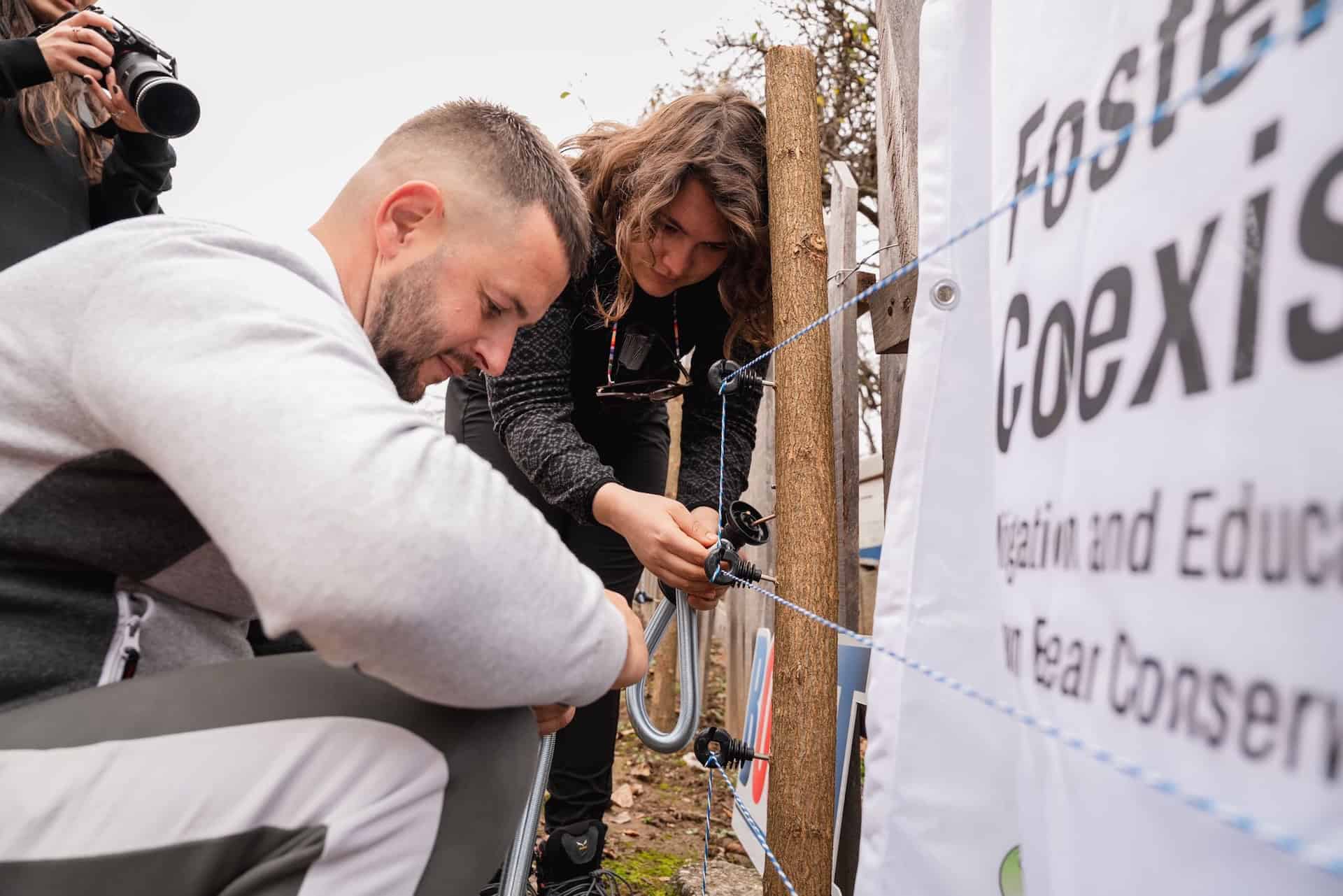
Large carnivore populations have recovered across Europe over recent decades, bringing species such as brown bears, grey wolves, Eurasian lynx and golden jackals back into landscapes where they were once absent. This recovery presents communities with both opportunities and challenges; economic benefits from ecotourism, renewed ecological connectivity, and cultural significance alongside practical concerns about livestock protection, safety, and property security.
These guidelines explore how local residents can respond constructively to large carnivore presence in their areas. It covers understanding community attitudes toward wildlife, implementing effective conflict mitigation measures, accessing compensation schemes, participating in stakeholder engagement initiatives, and supporting education programmes that foster long-term coexistence. The recommendations draw on research from EU-funded projects, and the EU Platform on Coexistence between People and Large Carnivores, which collectively demonstrate that successful human-carnivore coexistence depends on inclusive governance, evidence-based information sharing, and multilateral stakeholder relationships.
Understanding Community Attitudes Toward Large Carnivores
Research across European rural communities reveals complex and diverse attitudes toward large carnivores. Surveys of over ten thousand respondents show that safety concerns are generally low—only 32% feel unsafe around large carnivores, though in Romania nearly half report feeling insecure.
Positive emotions such as happiness and pride significantly shape support for carnivore presence, particularly when communities perceive tangible benefits from ecotourism or recognise ecological value. Conversely, negative views correlate with economic losses from predation and limited knowledge about animal behaviour.
Stakeholder analyses reveal that farming and hunting interests are under-represented in decision-making networks. Effective coexistence requires strengthening multilateral relationships and ensuring all affected parties have meaningful participation in management discussions.
Conditional acceptance of lethal control emerges when non-lethal measures prove ineffective, highlighting the importance of comprehensive mitigation before considering population management. Education and accessible information remain crucial priorities identified by residents across multiple countries.
You can find more information here and here.
Implementing Non-Lethal Conflict Mitigation Measures
Non-lethal prevention measures form the cornerstone of effective human-carnivore coexistence. Field experience from the LIFE WolfAlps project (2013–2018) demonstrates that combined approaches dramatically reduce livestock depredation.
Livestock Guarding Dogs — Trained guardian animals deter carnivores through presence and barking, proving highly effective when paired with human oversight. Breeder networks facilitate puppy exchanges and knowledge sharing among owners.
Electric Fencing — Well-maintained electric fences with daily inspections provide physical barriers for large carnivores. Combined with guard dogs, this approach achieves near-complete protection.
Night Pens — Secure enclosures during high-risk periods add critical protection for vulnerable young animals when predators are most active.
Human Presence — Regular monitoring and active shepherding disrupts carnivore hunting attempts and signals that prey is not easily accessible.
Carcass Removal — Prompt disposal of livestock deaths eliminates attractants that draw scavenging carnivores into residential areas.
You can find more information here and here.
Compensation and Financial Support Schemes
Financial compensation programmes help farmers recover losses from confirmed large carnivore depredation, reducing economic resentment and building goodwill toward conservation efforts.
National governments, regional authorities and the European Union administer these schemes, with reimbursement processes varying by jurisdiction. Claims typically require documentation including veterinary reports, photographic evidence, and official predation confirmation from wildlife inspectors.
The EU LIFE Programme has played an important role, funding more than 135 large carnivore projects between 1992 and 2019. These grants support protective infrastructure installations, monitoring equipment purchases, training programmes for livestock guardians, and direct compensation payments to affected farmers.
Beyond direct compensation, some regions offer subsidies for prevention investments such as electric fencing, guardian dogs, and secure night enclosures, reducing losses before they occur rather than only reimbursing afterwards. Early access to prevention funding often delivers better outcomes than post-incident compensation alone.
Farmers should maintain accurate livestock inventories and quickly report suspected attacks to ensure timely assessment and fair reimbursement under applicable schemes.
You can find more information here.
Participating in Stakeholder Engagement Platforms
Effective large carnivore management depends on inclusive dialogue among all affected groups. The EU Platform on Coexistence between People and Large Carnivores, established in 2014, unites European representatives from landowner organisations, farmers, reindeer herders, hunting federations, conservation NGOs (WWF, IUCN), and wildlife agencies.
Since 2018, LIFE-funded pilot projects have helped establish regional and local stakeholder platforms following the EU model. A freely accessible toolkit provides guidance on creating these forums based on lessons learned and good practice from across Europe.
Participation in local platforms enables residents to voice concerns directly to policymakers, access current information from authorities, and collaborate with neighbours on coordinated solutions. Regular meetings foster trust and transparency, reducing the misunderstandings that often escalate conflicts.
Communities without active platforms should engage their municipal councils or regional environmental offices about establishing local advisory groups. Individual farmers, foresters and residents contribute valuable ground-level knowledge that complements scientific monitoring data.
Active civic engagement ensures management decisions reflect community realities rather than purely theoretical conservation objectives.
You can find more information here.
Supporting Education and Outreach Programmes
Public education programmes counter misinformation and build informed support for coexistence initiatives. Schools, community centres, and local media serve as essential venues for disseminating evidence-based information about large carnivores.
Educational content should cover species biology, ecological roles, actual versus perceived risks, and practical safety guidelines. Hands-on components—such as demonstrations of livestock guarding dogs or guided wildlife viewing opportunities—create positive experiences that reshape fearful attitudes.
Youth engagement proves particularly impactful; surveys of teenagers show strong majority support for maintaining wolf and bear populations in Europe, suggesting that younger generations prioritise coexistence.
Local media partnerships amplify educational reach. Inviting wildlife biologists, conservation practitioners and experienced farmers as commentators provides diverse perspectives that balanced coverage requires.
Community-led initiatives such as workshops, field days and citizen science monitoring programmes, generate grassroots ownership of coexistence goals rather than presenting them as externally imposed requirements.
You can find more information here and here.
Long-Term Strategies for Sustainable Coexistence
Sustainable coexistence requires sustained effort across multiple fronts, not one-time actions. Communities that successfully share landscapes with large carnivores typically maintain ongoing communication channels, regularly update mitigation strategies, and adapt to changing conditions.
It is important to maintain continuous information flow between authorities and residents, accessible reporting mechanisms for incidents and sightings, responsive compensation systems, and regular evaluation of prevention effectiveness.
Transboundary cooperation matters, large carnivores range across administrative boundaries, so neighbouring municipalities must coordinate their approaches rather than developing contradictory policies. The LIFE EuroLargeCarnivores project demonstrated the value of cross-border information exchange and harmonised management, and 4PETHABECO project is connecting experts and stakeholders across Adriatic-Ionian Region and sharing knowledge on monitoring and management between countries.
Individual residents contribute significantly by staying informed through authoritative sources, participating in local engagement forums, implementing practical prevention measures on their own properties, and communicating constructively with neighbours about shared challenges.
Ultimately, coexistence reflects mutual accommodation—carnivores adjusting to human presence while humans accommodate carnivores’ ecological needs within shared landscapes.