
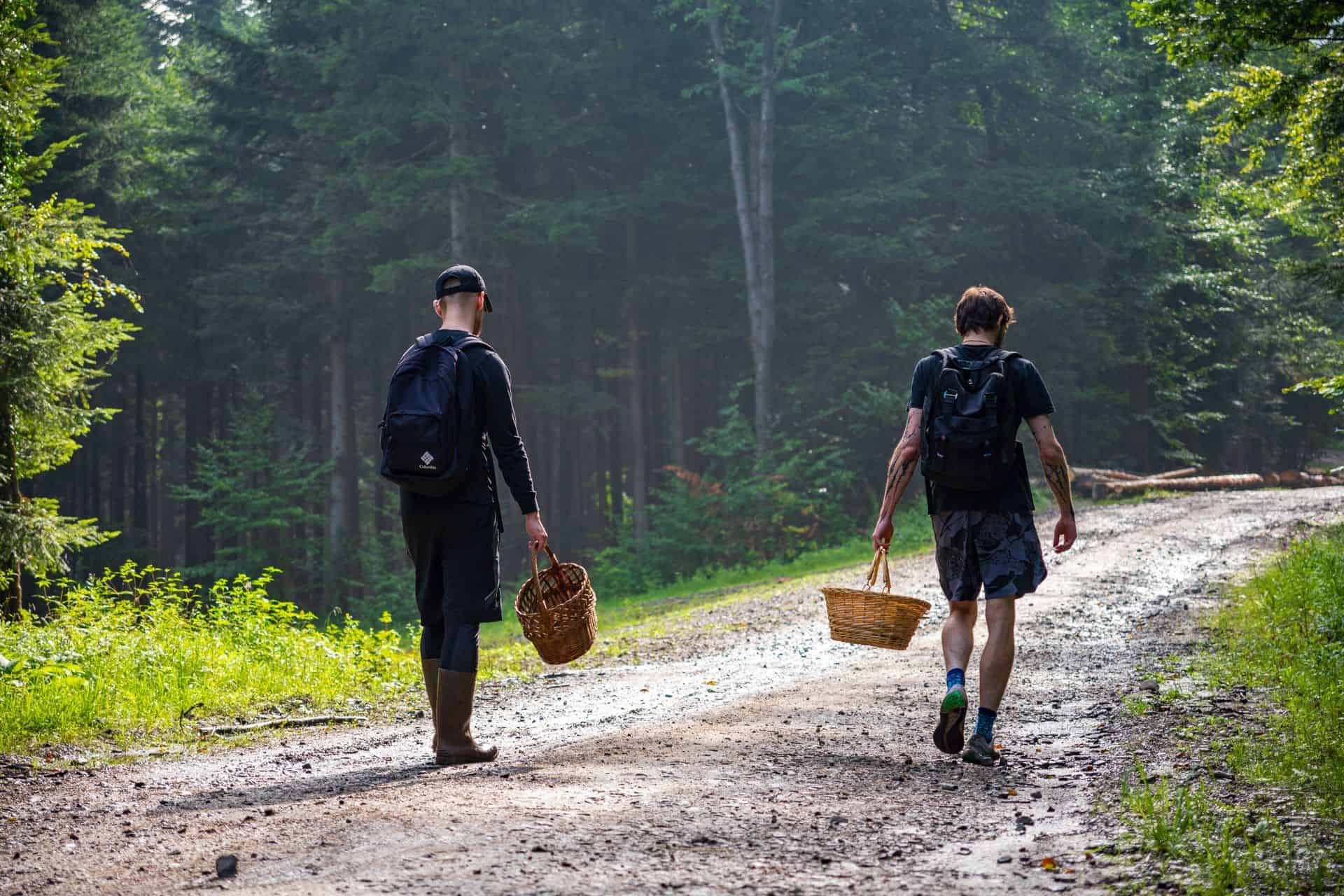
Working and spending time in areas inhabited by large carnivores requires awareness, preparation and responsible behaviour. This best practice provides practical guidance for foresters, hunters and foragers to reduce risks, prevent conflicts and safely coexist with bears, wolves, lynx and golden jackals.
Why Safety Procedures Are Needed
Forests and natural areas are shared environments where human activities and wildlife coexist. Foresters, hunters, mushroom pickers, berry collectors and other outdoor workers may occasionally encounter large carnivores while carrying out their activities.
Most encounters are rare and animals generally avoid humans. However, understanding how to behave in these situations is essential to reduce stress for both people and wildlife and to prevent potentially dangerous situations.
Safety procedures are particularly important in areas where large carnivores are present, during activities carried out at dawn or dusk, in remote locations, near feeding areas, or during periods when animals may be more sensitive, such as when females are accompanied by cubs.
Understanding Large Carnivore Behaviour
Large carnivores normally try to avoid contact with people. An animal that detects a human presence will often move away before being seen.
Understanding different types of behaviour helps people react appropriately:
Normal behaviour
Animals moving, feeding or travelling through their habitat are usually not a threat. Maintain distance and allow them to continue their activity without disturbance.
Defensive behaviour
Animals may react defensively when they feel threatened, surprised at close distance, or when they are protecting offspring, food resources or resting areas. Signs may include vocalisations, warning movements or attempts to make themselves appear larger.
Food-conditioned or habituated animals
Animals that have learned to associate humans with food or easy resources may show reduced fear of people. These situations require particular attention and should always be reported to the competent authorities.
Potentially problematic situations
Potentially problematic situations Repeated encounters, animals approaching human settlements, or individuals showing unusual behaviour should be documented and communicated to wildlife authorities.
Before Entering the Field
Preparation is the first step towards safe activities in large carnivore habitats.
Before entering the field:
- Check local information about recent wildlife observations or known activity areas.
- Inform colleagues, family members or responsible
- persons about your planned route and expected return time.
- Carry a charged mobile phone or appropriate communication device.
- Use GPS devices or maps when working in remote areas.
- Carry basic first-aid equipment.
- Wear suitable clothing and footwear for outdoor conditions.
- Avoid carrying food waste or leaving food remains int he environment.
- Follow local regulations and recommendations provided by protected area authorities.
For professional activities, organisations should ensure that workers receive basic training on large carnivore identification, behaviour and emergency procedures.
What to Do During an Encounter
If you encounter a large carnivore:
General recommendations
- Stay calm and do not run.
- Keep a safe distance from the animal.
- Slowly move away while facing the animal.
- Make your presence known by speaking calmly, especially if the animal has not noticed you.
- Never approach an animal to take photographs or observe it more closely.
If you encounter a bear
- Do not approach.
- Avoid sudden movements.
- Slowly increase the distance.
- If the bear has not noticed you, leave the area quietly.
- Never move towards cubs or attempt to separate a female from her offspring.
If you encounter a wolf, lynx or golden jackal
- Maintain distance and allow the animal to leave.
- Do not follow the animal.
- Avoid blocking its escape route.
- Report unusual behaviour or repeated close approaches.
Working in Groups and Remote Areas
Working in teams can significantly reduce risks and improve response capacity.
Recommended practices include:
- Informing team members about safety procedures before field activities.
- Maintaining communication between members of the group.
- Avoiding isolated activities in high-risk areas whenever possible.
- Establishing emergency procedures before entering remote locations.
- Carrying communication tools in areas with limited mobile phone coverage.
For lone workers, it is recommended to establish a check-in system and provide information about the planned activity, location and expected return time.
Actions to Avoid
To reduce risks and avoid encouraging problematic behaviour:
❌ Do not approach large carnivores.
❌ Do not feed animals or leave food available.
❌ Do not follow animals to observe them.
❌ Do not disturb resting animals.
❌ Do not move closer to cubs or young animals.
❌ Do not attempt to take selfies or close-up photographs.
❌ Do not block an animal’s escape route.
Responsible behaviour protects both people and wildlife.
Emergency Contacts and Incident Reporting
Any unusual encounter or potentially problematic situation should be reported to the appropriate wildlife authorities or local management bodies.
When reporting an observation or incident, provide:
- Date and time of the encounter.
- Exact location (GPS coordinates if available).
- Species involved.
- Number of animals observed.
- Description of animal behaviour.
- Photographs or videos, if safely collected.
- Any relevant information about the surrounding conditions.
Accurate reporting contributes to better monitoring and helps authorities improve conservation and safety measures.